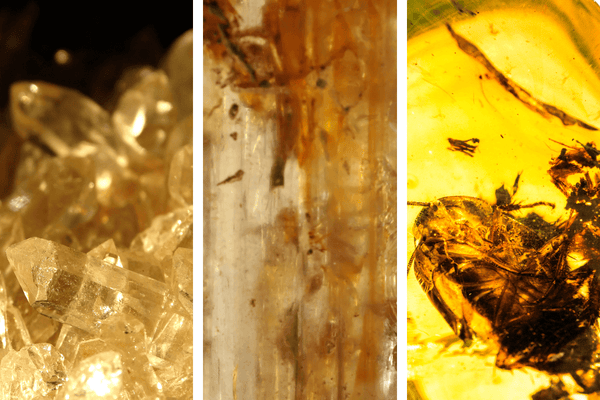
Pecos diamonds are not diamonds. They're quartz crystals with a point on both ends, and they come from one stretch of desert along the Pecos River in southeastern New Mexico.
They're also one of my favorite things to hunt for, which is saying something, because I hunt for a lot of rocks. Martin and I have gone looking for them three years in a row. Here's what they are, how we find them, and what people believe about them.
In this post
- What a Pecos diamond is
- Properties at a glance
- How a salt flat grew them
- How we hunt for them
- From the desert to your finger
- Pecos diamond spiritual meaning
- How to cleanse one
- Stones that pair well
- Quick answers
So what is a Pecos diamond?
Quartz. Good old silicon dioxide, the same mineral as the clear points all over my shop. It's a 7 on the Mohs hardness scale. A real diamond is a 10.
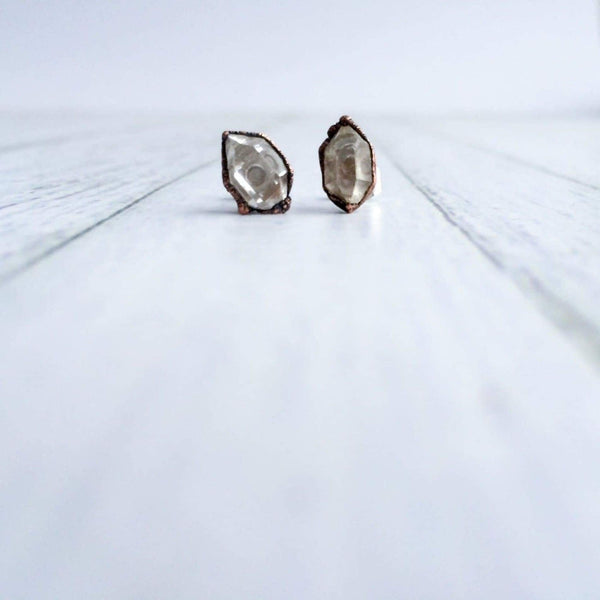
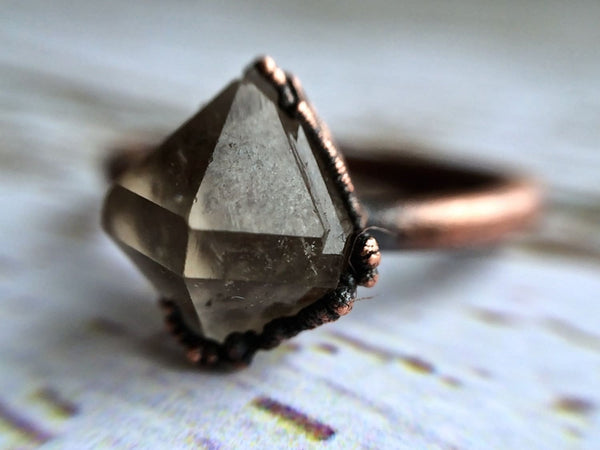
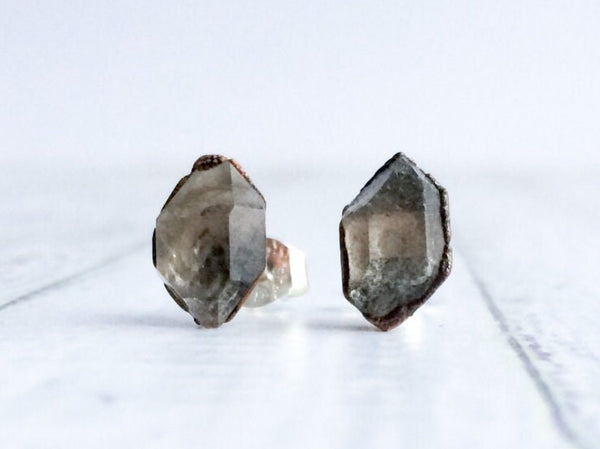
The shape is what makes them special. Most quartz grows stuck to a rock, so it only gets one point. Pecos diamonds grew surrounded by soft gypsum, so they had room to finish both ends. Geologists call that doubly terminated. I call it showing off.
Then there's the color. They come in white, pink, yellow, orange, rusty red, brown and nearly black. Some grow as stubby little near-cubes, a shape that's rare for quartz almost everywhere else.
If you know Herkimer diamonds from New York, these are their desert cousins.
Pecos diamond properties at a glance
- Mineral: quartz (silicon dioxide)
- Hardness: 7 on the Mohs scale
- Shape: a point on both ends, and sometimes a stubby near-cube
- Colors: white, pink, yellow, orange, rusty red, brown and nearly black
- Age: about 260 million years
- Found in: the Seven Rivers Formation, southeastern New Mexico
- In crystal traditions: an amplifier, often linked with the crown chakra and clarity
How a salt flat grew them
About 260 million years ago, this corner of New Mexico was a salt flat beside a shallow sea. It flooded and dried, over and over, and left thick beds of gypsum behind.
In a few pockets, quartz crystals grew inside that gypsum. Gypsum is soft, so it slowly weathered away. The quartz stayed put. That's why you find Pecos diamonds lying loose on the ground and not locked inside rock.
The layer they come from is called the Seven Rivers Formation. It runs about 100 miles along the Pecos Valley, and the crystals only turn up in certain parts of it.
The Spanish explorer Antonio de Espejo is said to have come across fields of glittering crystals here in 1583 and taken them for diamonds. Honestly, same.
How we hunt for them
After the gem show in Tucson, Martin and I drive out toward Roswell and spend a day walking around staring at the ground.
A few things we've learned:
- Look low. Our best spots have been low ground with pale, dusty soil.
- Expect surprises. We've gone back to the same spot and had a completely different day.
- Look for more than one shape. We find single points, double points and clusters.
- Bring water. Gas and snacks are about 20 minutes away, but it's still the desert.
- Stay on public land. Surface collecting is allowed on Bureau of Land Management land. Private land needs the owner's permission.
About that last one. One year we followed coordinates from a 1970s geological survey and ended up across from a school. A ranch hand came out to tell us we were on private land. He was right, and we left. Check a current land map before you park.
From the desert to your finger
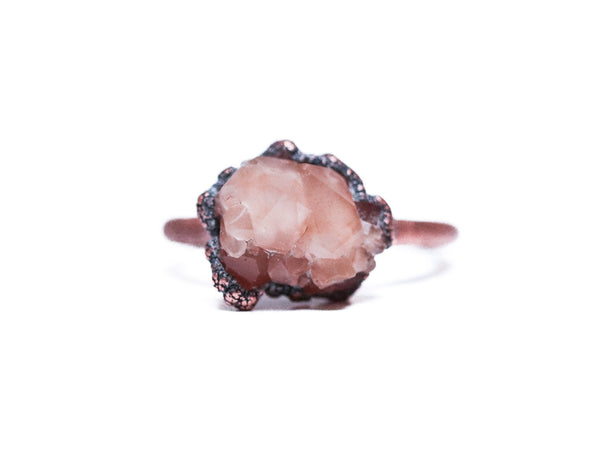
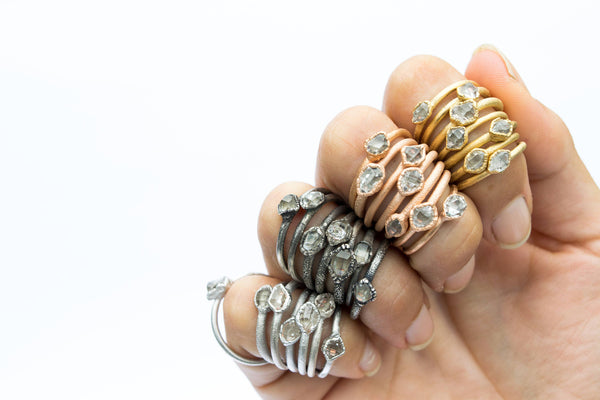
Back in the studio on Martha's Vineyard, each crystal is electroformed onto a hand-hammered ring of recycled copper. Electroforming grows a layer of copper around the base of the stone, so the metal follows the crystal's own shape.
The Pecos diamonds in my rings are ones Martin and I picked up off the desert floor ourselves. So when I say I know where your stone came from, I mean I was standing there.
No two come out alike. If you love a certain color or shape, leave a note at checkout and I'll match a stone to you.
Shop the Pecos diamond ring, or see the rest of the raw quartz jewelry.
Pecos diamond spiritual meaning
There's no ancient rulebook for this stone. Most of what people say about Pecos diamonds comes from what they believe about quartz.
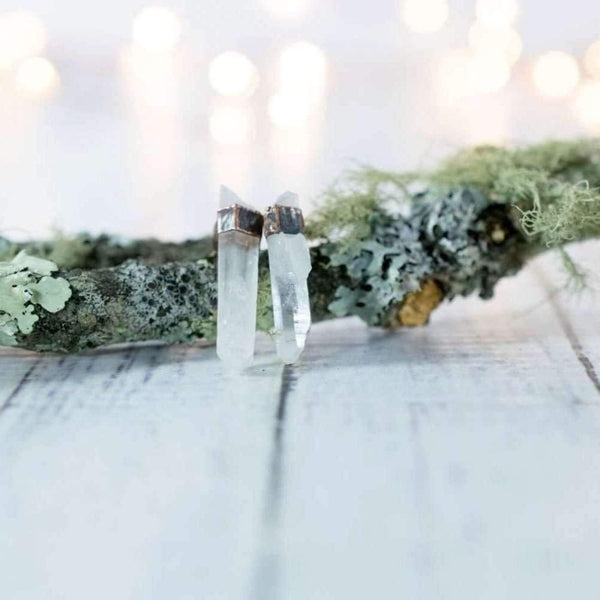
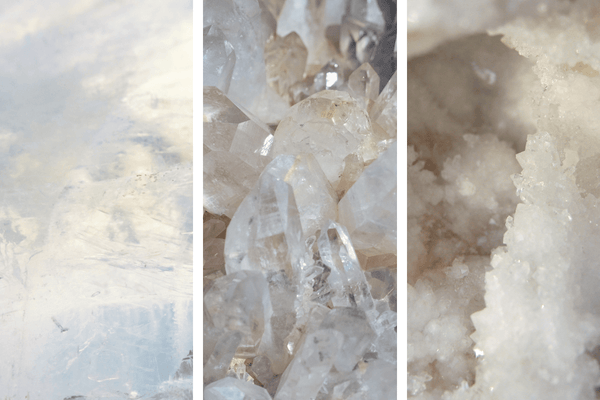
In crystal traditions, clear quartz is called an amplifier. It's thought to strengthen an intention and the stones worn with it. Double-pointed crystals are believed to move energy in both directions, which is why people like to hold them during meditation.
I believe in the power of intention, and I can't promise a rock will fix anything. Both are true.
How to cleanse a Pecos diamond

Cleansing is a ritual, and you get to pick the one that feels right. These are the traditional ways:
- Moonlight. Leave it on a windowsill overnight under a full moon.
- Smoke. Pass it through the smoke of an herb bundle or incense.
- Sound. Ring a bell or a singing bowl beside it.
- Intention. Hold it, breathe, and decide what you want it to carry.
Skip the salt water soak you'll see recommended elsewhere. Quartz doesn't mind it, but salt is hard on copper.
Stones that pair well with Pecos diamonds

Quartz is believed to amplify whatever it sits beside, so it goes with nearly anything. A few favorites:
- Amethyst: long associated with calm
- Rose quartz: the classic stone for love
- Citrine: a symbol of abundance and optimism
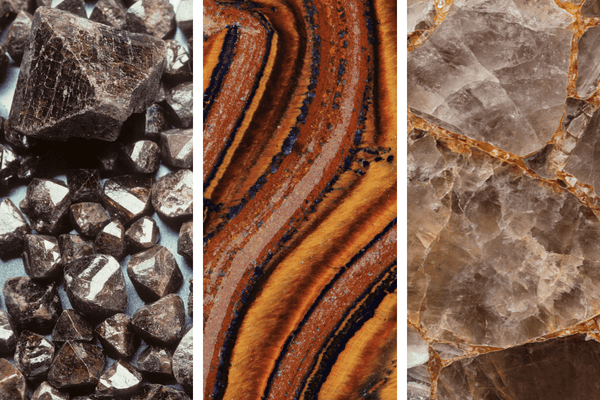
- Smoky quartz: traditionally a grounding stone
They stack nicely, too. Browse all the raw crystal rings.
Quick answers
Are Pecos diamonds real diamonds?
No. They're quartz, a 7 on the Mohs hardness scale.
Where are Pecos diamonds found?
In the Seven Rivers Formation along the Pecos River valley in southeastern New Mexico, including the country around Roswell.
Can I collect them myself?
Yes. Surface collecting is allowed on Bureau of Land Management land. Ask permission before you step onto private land.
Can I wear one every day?
Yes. Quartz is harder than glass. The points can still chip if you knock them hard, so take your ring off for heavy work.
Are Pecos diamonds valuable?
Not in the diamond sense. They're quartz, so they cost far less than a real diamond. People collect them for their shape and color.
Come along next time
Want to hear what we bring home from the next trip? Join the Crystal Club in the signup box below. No spam, just stones.